
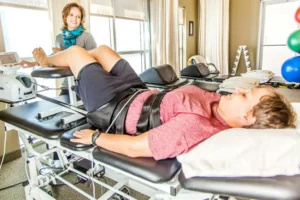
Few symptoms are as disruptive as pain that starts in the lower back and travels down the leg. Behind many of these cases is a pressurized, injured intervertebral disc crowding a nearby nerve root. Spinal decompression therapy Cape Coral, FL patients explore is built around one biomechanical idea: reducing the load inside the disc so the neural structures around it have room to settle. This guide explains how disc pressure behaves, how the sciatic pathway becomes irritated, and what non-surgical decompression is designed to do.
Inside the Disc: Pressure, Water and Load
Every lumbar disc has two main parts. The nucleus pulposus is a gel-like core rich in water, and the annulus fibrosus is a layered ring of fibrous tissue that contains it. Together they work like a hydraulic cushion, distributing compressive force between vertebrae. Pressure inside that cushion changes constantly with posture and movement, and it rises noticeably during prolonged sitting, forward bending and lifting with a rounded back.
How a Disc Bulges and Herniates
Repeated loading can create small fissures in the annulus. As the inner fibers weaken, the nucleus is pushed toward the outer wall, producing a disc bulge. If the outer layers give way further, nuclear material can protrude, which is a herniation. The direction matters: a bulge toward the back or side of the spinal canal brings the disc into contact with the traversing nerve root and the sensitive tissue around it.
Why Discs Depend on Movement for Nutrition
Adult discs have almost no direct blood supply. They receive nutrients and clear waste through diffusion, a process driven by cycles of loading and unloading that pump fluid in and out of the disc. When a disc is chronically overloaded or stiff, that exchange becomes less efficient. Fluid content can decline, disc height can narrow and the segment may become less tolerant of everyday stress. This is the structural background that many people describe simply as a worn or degenerating disc.
From Disc Bulge to Sciatic Pain: Tracing the Nerve Pathway
The sciatic nerve is formed by nerve roots that exit the lower lumbar spine and the sacrum. It travels through the buttock and down the back of the thigh, branching toward the calf and foot. When a lumbar nerve root is irritated near the disc, symptoms can follow that pathway, producing sharp, burning or electrical sensations, numbness or tingling in the leg.
Mechanical Compression Versus Chemical Irritation
Nerve root symptoms are not caused by pressure alone. The material inside a damaged disc contains inflammatory compounds, and when it contacts a nerve root it can trigger a chemical irritation response in addition to mechanical squeezing. That combination helps explain why some people have significant leg symptoms with a modest disc bulge, while others have a larger one with fewer symptoms.
Why a Sciatica Chiropractor Cape Coral, FL Starts with Differentiation
Not every pain in the leg is true radicular pain. Tight deep hip muscles, sacroiliac joint dysfunction and referred pain from facet joints can mimic sciatic symptoms. A sciatica chiropractor Cape Coral, FL patients consult begins by separating these sources through orthopedic testing, neurological screening, movement analysis and, when appropriate, referral for imaging. Correctly identifying the source determines whether decompression, joint mobilization, soft tissue work or a combination is the right match.
The Mechanics of Non-Surgical Spinal Decompression
Non-surgical decompression uses a computer-guided table and a comfortable harness to apply a controlled, graduated distraction force to the lumbar spine. The force is increased and relaxed in a deliberate pattern rather than pulled continuously, which helps avoid triggering protective muscle spasm. The intent is to gently separate the vertebral segments so the disc and nerve root are unloaded.
The Negative Intradiscal Pressure Concept
When the spine is lengthened in a controlled way, pressure inside the disc can drop, and under some conditions it may become lower than the pressure outside. This is often called a vacuum or negative pressure effect. The proposed benefits are twofold. A lower-pressure environment may reduce the outward push on a bulging disc, and the unloading may encourage fluid and nutrient exchange into the disc. Research in this area is still developing, so decompression is best described as a supportive tool that may reduce nerve root pressure in appropriate candidates, not as a guaranteed solution.
Who Is Evaluated as a Candidate
Decompression is not suitable for everyone. Careful screening matters, and conditions such as fractures, advanced osteoporosis, certain spinal implants, pregnancy and signs of serious neurological compromise generally rule it out. People with symptoms such as loss of bladder or bowel control, rapidly worsening leg weakness or numbness in the groin region need urgent medical attention rather than any form of therapy. When decompression is appropriate, spinal decompression is integrated with other forms of care instead of used alone.
Beyond the Table: Rehabilitation That Supports Structural Recovery
Unloading the disc is only part of the picture. If the movement habits that overloaded it remain unchanged, the same stress will return. Rehabilitation therefore targets the muscles and joints that control lumbar load.
- Deep core stabilizers that act like a natural brace for the lumbar spine
- Hip mobility, because stiff hips force the lower back to move excessively
- Gluteal strength, which supports pelvic control while walking and standing
- Neural mobilization to help the irritated nerve glide more freely
- Lifting and bending mechanics that spare the posterior disc
Combined with joint mobilization and soft tissue work, these strategies form the foundation of structured sciatica treatment that addresses both the symptom and the mechanical cause.
Functional Milestones to Watch For
Recovery from nerve root irritation is best tracked through function. Meaningful signs of progress include:
- Leg symptoms that shrink toward the back instead of spreading down the limb
- Greater tolerance for sitting during a drive or at a desk
- Easier transitions from sitting to standing
- Improved comfort with walking, bending and reaching
- More confidence returning to recreation such as walking, golf or gardening
Responses vary with the size and location of the disc injury, general health and how consistently a plan is followed.
Everyday Habits That Reduce Spinal Load
Small changes can lower stress on a sensitive disc. Alternate between sitting, standing and walking rather than holding one position for too long. Keep the hips slightly above the knees when seated, and support the natural lumbar curve. Hinge at the hips when lifting, keep objects close to the body, and avoid twisting while carrying a load. For those whose symptoms began after a collision, understanding how delayed whiplash and spinal soft tissue injury develop can also clarify why the lower back may need attention as well.
If radiating leg pain is limiting how you sit, walk or sleep, a precise evaluation is the most useful first step. At Midpoint Chiropractic Center, care centers on identifying the true source of nerve irritation, determining whether decompression is appropriate and supporting recovery through non-invasive structural rehabilitation. Schedule a consultation to learn how a tailored plan could support your spine and help you return to the activities you enjoy.
Frequently Asked Questions
Most people describe the sensation as a gentle stretch. The force is applied gradually and adjusted to comfort, and it should not be sharply painful. Any increase in symptoms should be reported so the approach can be modified.
It may help reduce pressure on the disc and surrounding nerve root in suitable candidates, which can support symptom relief and function. Outcomes vary, and some conditions still require medical or surgical consultation.
Low back pain stays mostly in the lumbar region, while sciatica follows the nerve pathway into the buttock or leg and may include tingling, numbness or weakness.
No. An adjustment applies a quick, targeted force to restore joint motion, while decompression applies a slow, controlled distraction force to unload the disc and nerve root. They are often used together within a broader plan.